AR-15 Fundamentals
The AR-15 is one of the most popular rifles in the United States, known for its versatility, modularity, and adaptability to various roles. First introduced in the late 1950s by Eugene Stoner and later adopted for military use as the M16, the AR-15 has become a cornerstone of modern firearm design and civilian ownership. Understanding its fundamentals is essential for new shooters and seasoned enthusiasts alike.
Design and Functionality
The AR-15 operates using a direct impingement or gas-piston system, which propels gas from a fired cartridge to cycle the action. This semi-automatic rifle chambers one round per trigger pull, making it different from fully automatic firearms commonly seen in military use. Its lightweight aluminum construction makes it easy to handle for prolonged periods, while its ergonomically designed pistol grip and adjustable stock ensure customizable comfort for shooters of varying preferences.
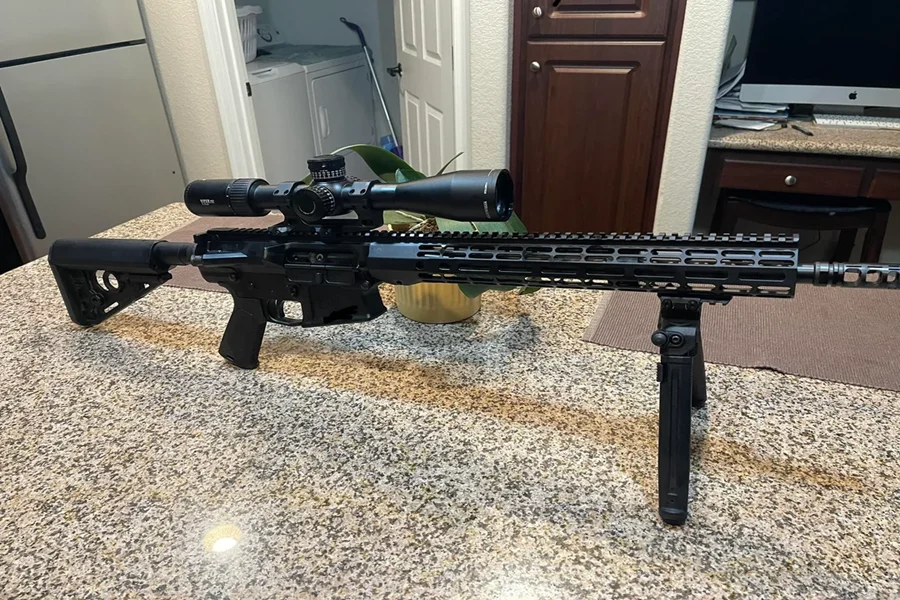
One of the key elements that sets the AR-15 apart is its modularity. The rifle consists of two main parts: the upper receiver and the lower receiver. These components can be swapped out with ease, allowing users to modify their rifle’s caliber, barrel length, or even aesthetics without needing an entirely new firearm.
Caliber Versatility
Though originally chambered for 5. 56 NATO/. 223 Remington rounds—which remain some of its most commonly used calibers—the AR-15 platform can accommodate a wide array of calibers thanks to its modular design. From . 300 Blackout to 6. 5 Grendel or even larger hunting rounds like . 458 SOCOM, this adaptability makes it suitable for everything from recreational target practice to hunting or personal defense.
Legal Considerations
Before purchasing or owning an AR-15, it’s important to understand local laws regulating these firearms in your area. Some jurisdictions may impose restrictions on certain features like pistol grips or collapsible stocks due to their classification as “assault weapons. ” Ensuring compliance with state and federal regulations not only avoids legal trouble but also fosters responsible gun ownership practices.
Key Features that Define an AR-15
Several defining characteristics make the AR-15 stand out:
1.Picatinny Rails/M-Lok Systems: These attachment systems allow mounting accessories such as optics, lights, lasers, or grips. 2.Adjustable Stocks: A collapsible stock ensures better fitment across users with different arm lengths. 3.Forward Assist: This small button on some models helps push a partially seated bolt into battery if needed during operation. 4.Birdcage Flash Suppressor: Often found at the end of standard barrels; it reduces muzzle flash when firing.
Why It’s Loved by Civilian Shooters
The widespread popularity of AR-15s stems not only from their historical significance but also from their practicality in various shooting disciplines. Whether you’re taking up competitive shooting sports like Three-Gun matches, heading out for a hog-hunting trip with friends in rural areas, or simply enjoying casual target practice at your local range—the rifle provides precision and performance tailored to nearly any need.
Understanding these fundamentals equips owners with confidence while using their rifles responsibly and effectively across many environments.
How to Shoot the AR-15
Mastering the art of shooting an AR-15 requires a combination of knowledge, practice, and confidence. Whether you are a seasoned shooter or someone new to the platform, understanding proper techniques and overall mechanics is key to accuracy, safety, and enjoyment. This guide will outline key aspects of handling and firing the AR-15 rifle with precision.
Grip and Stance
The grip and stance are fundamental elements that affect your control over the rifle. Maintain a firm but relaxed grip on the pistol grip of the AR-15 with your dominant hand. Position your support hand on the handguard closer to the muzzle for additional stability.
For stance, adopt an athletic position with feet shoulder-width apart. Your knees should be slightly bent for balance, while leaning slightly forward from your waist. This posture helps absorb recoil while providing greater control when engaging multiple targets or transitioning between shots.
Aiming Fundamentals
Aiming accurately requires alignment between your sights (or optics) and your target. For rifles equipped with iron sights, ensure proper sight alignment by centering the front post within the rear aperture. If using a red dot or scope, focus on placing the reticle directly on your point of aim.
Pay attention to sight picture clarity. Your eye should naturally focus on either the front sight or reticle while keeping both eyes open for situational awareness—this is especially useful when shooting at moving targets or in dynamic environments.
Trigger Discipline
Trigger pull is one of the most critical skills in achieving accuracy with an AR-15. Apply consistent pressure directly backward with minimal movement until the shot breaks. Avoid jerking or slapping at the trigger as this will disrupt your aim and result in missed shots.
Focus on “trigger reset” during rapid firing drills; after releasing enough pressure for reset click feedback, prepare for subsequent shots instead of fully disengaging from contact.
Breathing Control
- Inhale deeply before aligning on target.
- Hold halfway through exhalation during controlled squeeze execution; avoid prolonged holds which create tension-induced shaking/discomfort.
How to Shoot the AR-15
Shooting an AR-15 effectively and safely requires not only understanding the mechanics of the firearm but also refining your technique, awareness, and practice routines. Whether you’re a beginner developing new skills or an experienced shooter fine-tuning your abilities, mastering the AR-15 involves focus on fundamentals, proper form, and a clear understanding of its operation.
Understanding Shooting Fundamentals
Before pulling the trigger, it’s essential to have a grasp of basic shooting principles.
- Stance and Position: Establishing a proper shooting stance is critical. Your body should feel stable to effectively absorb each shot.
- Grip: Maintain a firm but not overly tight grip on the pistol grip of your AR-15. Your support hand should rest on the handguard, helping to guide and stabilize the rifle as you aim or fire.
- Trigger Discipline: Always keep your finger off the trigger until ready to shoot. Apply smooth and consistent pressure directly backward when firing for improved accuracy.
Aiming Techniques
The key to precision shooting lies in focusing on sights or optics while maintaining target awareness. For AR-15s equipped with standard iron sights, align both front and rear sights with your target carefully before firing. If you’re using optics such as red dot sights or scopes, ensure they are properly zeroed before heading out for live fire practice.
Breathing control is another important aspect of aiming accuracy. Pause your breath momentarily at the natural respiratory pause (the slight moment after exhaling) when taking each shot—this reduces unnecessary movement from breathing patterns.
Recoil Management
Despite its relatively mild recoil compared to other rifles, mastering recoil management ensures faster follow-up shots—a vital skill in both sport shooting or defensive situations: – Use your forward hand as a stabilizing force. – Keep the buttstock firmly seated into your shoulder pocket. – Lean slightly into each shot rather than leaning back; this counteracts any backward force generated by firing.
Range Practice for Skill Building
Frequent range time is essential for improving proficiency with an AR-15 rifle. Start small by practicing slow-paced shots aimed at precision targets from varying distances (e. g. , 25 yards progressing outwards). Over time incorporate timed drills such as controlled rapid-fire sequences paired alongside reloading exercises—this simulates real-world scenarios where speed and accuracy are crucial.
Dry fire practice at home can also be incredibly beneficial for strengthening muscle memory without using live ammunition; this involves going through shooting motions safely while ensuring no rounds are present in either chamber or magazine during these sessions.
Safety Considerations While Shooting
Safety must never be overlooked during any interaction involving firearms—even at advanced expertise levels: – Treat every firearm as if it’s loaded until confirmed otherwise. – Always point barrels in safe directions whether practicing indoors/outdoors. – Double-check surroundings (especially downrange areas) before engaging targets.
Proper ear protection (muffs/plugs) alongside eye protection remains non-negotiable whenever practicing live-fire drills—prolonged exposure risks hearing loss while stray debris poses possible injury hazards unprotected vision faces frequently under active conditions even outdoors w clean environ
AR-15 Ammo Choices
Selecting the right ammunition for your AR-15 is a critical component of optimizing its performance. The versatility of the AR-15 platform is one of its standout features, and the type of ammo you choose can significantly impact everything from accuracy to terminal ballistics, depending on your intended use. With an abundance of calibers and bullet designs available, understanding their characteristics helps tailor your rifle to specific applications such as target shooting, hunting, or home defense.
Common Calibers for the AR-15
The most widely used caliber for the AR-15 is . 223 Remington/5. 56 NATO. These rounds are nearly identical in appearance but differ in pressure tolerances and chamber specifications. Rifles chambered for 5. 56 NATO can safely fire both 5. 56 NATO and . 223 Remington, whereas those chambered in . 223 Remington should not fire 5. 56 NATO due to the higher pressure of these rounds.
- 300 Blackout: Known for its subsonic capabilities when paired with a suppressor, this caliber excels in short-barreled rifles (SBRs) and close-range shooting scenarios.
- 1.1 Grendel: Designed for long-range precision shooting with better ballistic performance than . 223/5. 56.
- 2.2x2mm: A popular choice for those transitioning from AK platforms or seeking more stopping power.
- 224 Valkyrie: Ideal for long-distance shooting enthusiasts aiming to maximize accuracy beyond 1,000 yards.
Each caliber has unique applications and trade-offs in terms of cost, availability, recoil, and ballistic trajectory.
Bullet Types & Weights
- Full Metal Jacket (FMJ): FMJ rounds are affordable and suitable for training or plinking at the range due to their non-expanding nature.
- Hollow Point (HP): Featuring a hollow cavity at the tip that expands on impact, these are often preferred for self-defense or hunting purposes.
- Soft Point (SP): A versatile bullet type offering controlled expansion; great for hunting medium-sized game like deer.
- Ballistic Tip: Combining aerodynamic properties with rapid expansion upon impact makes it a good option for varmint hunting.
Bullet weights typically range between 40 grains (lightweight) to over 77 grains (heavy). Lighter bullets excel at speed but may lose stability over long distances in certain barrel twist rates; heavier bullets pack more energy but may require precise tuning with your rifle’s barrel specifications.
Barrel Twist Rate & Its Role
Your rifle’s barrel twist rate plays a significant role in determining which ammunition will perform best through it.
- 1:7 Twiststabilizes heavier bullets (60–90+ grains) ideal for long-range shooting or tactical scenarios.
- 1:9 Twistworks well with lighter bullets (40–55 grains), making it perfect for casual shooters targeting shorter ranges.
Matching your ammo’s weight with the appropriate barrel twist ensures greater accuracy and consistency shot after shot.
Choosing Ammo Based on Application
- For casual target practice or competitions where cost efficiency matters most, FMJ in . 223/5. 56 might be ideal.
- For self-defense or home protection scenarios requiring effective stopping power without overpenetration risks, hollow points in calibers like . 300 Blackout could be the better choice.
Ultimately, testing multiple brands and loads through your specific rifle will yield insights into what performs best under real-world conditions while meeting your personal preferences—including reliability across magazines or environmental settings such as extreme heat/cold.
Understanding these nuances ensures not only better results downrange but also greater confidence knowing you’ve prepared effectively based on intended purpose rather than random chance alone.
AR-15 Optics & Scopes
Choosing the right optics and scopes for your AR-15 can transform your shooting experience, whether you’re using the rifle for hunting, target shooting, or home defense. Optics enhance precision and situational awareness, allowing shooters to engage targets with greater confidence and accuracy at varying distances. Understanding the options available, as well as their strengths and limitations, is key to optimizing your rifle’s performance.
Types of Optics for AR-15 Rifles
Optics can generally be divided into three categories: red dot sights, holographic sights, and magnified scopes. Each serves a specific purpose depending on the shooting style and intended application.
- Red Dot Sights: These are ideal for close-range engagements due to their simplicity and fast target acquisition. They project a single point of light—typically red or green—onto a lens to serve as an aiming reticle. Red dot sights are lightweight and allow shooters to maintain peripheral vision while aiming.
- Holographic Sights: A more advanced option than red dots, holographic sights use a laser transmission system to create a reticle image that appears to float on the target plane. They offer better clarity in low-light conditions and accommodate rapid transitions between targets without compromising accuracy.
- Magnified Scopes: For long-range shooting or precision work, magnified scopes are indispensable. With variable zoom levels (e. g. , 1-6x or 3-9x), these optics allow shooters to effectively engage distant targets while providing ballistic compensation via reticles designed with holdover points.
Factors To Consider When Choosing an AR-15 Optic
- Purpose: Determine whether you need optics for close quarters (CQB), mid-range versatility, or long-distance accuracy.
- Durability: Look for models with robust construction that withstand recoil, environmental conditions, and extended use. Brands like Aimpoint, Trijicon, and Vortex are known for reliability.
- Battery Life: Battery life is crucial when choosing electronic sights such as red dots or holographic systems; opt for models with extended runtime if used frequently.
- Mounting Options: Ensure compatibility with Picatinny rails typically found on AR platforms while considering co-witnessing options with iron sights.
Practical Tips on Using Optics Effectively
Proper installation is critical when adding optics to your AR-15 platform. When mounting scopes or red dot systems, be meticulous about securing them tightly with torque settings recommended by manufacturers to prevent shifting during recoil cycles.
Additionally: – Confirm zeroing by sighting in at either 25 yards (for short-range use) or 50/100 yards depending on typical engagement distances. – Use quality ammunition consistently during zeroing sessions since variations may affect trajectory alignment.
Training regularly using optics ensures familiarity under different lighting conditions—from bright daylight scenarios outdoors to darker indoor environments—so that adjustments become second nature.
Popular Recommendations
1) Aimpoint PRO Patrol Rifle Optical – Renowned durability & extended battery longevity 2) EOTech EXPS3 Holographics Sight Advanced rapid acquisition reticle targeting technology
AR-15 Upgrades & Accessories
The AR-15 platform stands out not just for its performance, but for its remarkable modularity. This unique design allows owners to customize and upgrade their rifles to suit specific needs, preferences, or applications. Whether you’re looking to enhance accuracy, improve comfort, or boost functionality, the world of AR-15 upgrades and accessories offers virtually limitless options.
Popular AR-15 Upgrades
Upgrading your AR-15 starts with identifying your goals—whether they are competitive shooting, home defense, hunting, or recreational use.
Handguards:
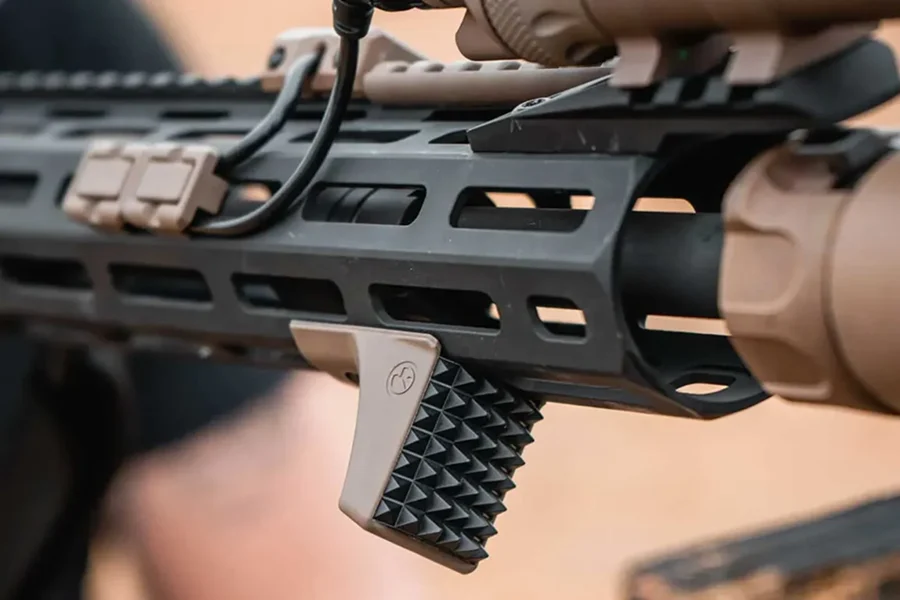
Free-floating handguards have become a popular choice among enthusiasts. They allow for greater accuracy by ensuring that barrel vibrations remain undisturbed by external forces. Additionally, many handguards come equipped with M-LOK or KeyMod slots for mounting accessories like lights or grips.
Triggers:
Upgrading a stock trigger can dramatically change your shooting experience. Aftermarket triggers often feature smoother pulls and shorter resets. Single-stage triggers are favored for speed and simplicity in tactical scenarios, while two-stage triggers provide finer control for precision shooting.
Stocks:
A high-quality adjustable stock can significantly improve comfort and shooting ergonomics. Whether you prefer a lightweight minimalist design for maneuverability or a heavier option suited for marksmanship, a tailored stock ensures proper cheek weld and recoil management.
Barrels:
Replacing the factory barrel can enhance accuracy and durability. Stainless steel barrels are celebrated for their precision potential, while chrome-lined options offer better heat resistance during extended firing sessions.
Practical Accessories to Enhance Performance
Optics Mounts & Backup Sights:
Your optics setup is only as good as its mounting system. Quick-detach mounts enable rapid removal of optics without losing zero—a critical feature if you rely on backup iron sights (BUIS). Quality BUIS ensures reliability in case of optic failure.
Slings:
A comfortable sling is an underrated yet invaluable accessory for carrying and stabilizing your rifle during prolonged use. Two-point slings are versatile and popular among many shooters due to their adaptability in various positions.
Weapon Lights:
In low-light conditions or defensive scenarios, weapon-mounted lights offer increased visibility without compromising handling efficiency. Choose durable lights with high lumen output that integrate seamlessly onto your rifle’s rail system.
Vertical Grips & Angled Foregrips:
Both vertical grips (VGs) and angled foregrips (AFGs) provide improved weapon control during rapid fire or transitions between targets. While VGs allow a more traditional grip style, AFGs promote natural wrist angles that reduce fatigue over time.
Choosing Quality Over Quantity
When considering upgrades and accessories for your AR-15, quality should always take precedence over quantity. A well-thought-out selection of reliable components will outperform an overloaded rifle burdened by unnecessary additions every time. Opting for trusted manufacturers known within the firearms industry ensures that parts meet rigorous standards of durability and function under stress.
The beauty of upgrading an AR-15 comes from its flexibility—no two rifles need to look alike because no two owners have exactly the same requirements. By carefully choosing components tailored to match both purpose and preference, you can create a firearm that feels uniquely yours while performing at its peak potential every time it’s called into action.
Building Your Own AR-15
Building your own AR-15 is a rewarding experience for firearm enthusiasts, offering not only a deeper understanding of the rifle’s mechanics but also an opportunity to create a customized platform tailored to your individual needs. Whether you’re aiming to optimize performance, achieve a specific aesthetic, or simply enjoy the hands-on process, assembling an AR-15 can be both educational and enjoyable.
Understanding the Basics of an AR-15 Build
Before diving into building your own AR-15, it’s essential to understand its modular nature.upper receiver and the lower receiver.
- Upper Receiver: Includes components such as the barrel, bolt carrier group (BCG), gas system, and handguard.
- Lower Receiver: Houses the trigger assembly, magazine well, safety selector, grip, and stock.
The modularity of the AR-15 allows you to mix and match parts from different manufacturers while staying within legal guidelines.
Planning Your Build
Proper planning is crucial before sourcing parts or embarking on assembly.
- Intended Use: Decide whether your build will focus on home defense, long-range precision shooting, competition shooting, or recreational plinking. This will determine key choices such as barrel length, caliber selection, and optic compatibility.
- Budget: While building allows for cost savings in some cases compared to purchasing a complete rifle off-the-shelf, prices can escalate quickly depending on your component choices.
- Compliance with Local Laws: Be aware of federal and state regulations regarding firearm assembly. For example, acquiring a stripped lower receiver typically requires completing a background check since it is considered the serialized part of the firearm.
Tools You’ll Need
- Armorer’s wrench
- Torque wrench
- Punch set
- Bench vise with upper receiver block
- Roll pin holders
- Hex keys
Additionally, using anti-seize lubricant on threaded components during installation can prevent wear over time.
Selecting Components
One of the most appealing aspects of building your own AR-15 is choosing every individual part according to your preferences.
- Barrel: Choose between various profiles (lightweight or heavy) and lengths (commonly 16” for versatility). Barrel material (chrome-moly steel or stainless steel) impacts durability and accuracy.
- Gas System: Options like carbine-length or mid-length gas systems have unique effects on recoil control and reliability based on barrel length.
- Trigger Assembly: A high-quality trigger improves precision; consider single-stage triggers for simplicity or two-stage triggers for greater control under stress.
- Handguard System: Free-floating handguards enhance accuracy by isolating barrel movement from external pressure applied during handling.
Assembling Your Rifle Step by Step
- Begin construction with the lower receiver by installing elements such as the trigger group and magazine catch before attaching pistol grips or stocks.
- Move onto assembling the upper receiver by mounting items like forward assists (if applicable), BCGs (bolt carrier groups), barrels via their respective nuts tightened using torque wrenches calibrated correctly alongside ensuring accurate thread engagement preventing misalignment risks/errors altogether eventually connecting/loading optics downline pairing scopes finely-tuned targeting ranges optimized functionality builds avoiding distractions/unfit placements ruining marksmanship standards precision operational-centric outcomes reliably maintained throughout process intensification phases reduced troubleshooting/complication instances minimizing extra-adjustment/investment overhead period-efficient robustness summarized experience overall.