Understanding KeyMod and M-LOK Attachment Systems
KeyMod and M-LOK are two popular attachment systems used for mounting accessories on firearms, particularly in the context of modular handguard designs. Both systems aim to enhance customization, allowing users to attach grips, lights, lasers, bipods, and other tools directly to the rifle. While they serve a similar purpose, their fundamental design philosophies and engineering differ significantly.
KeyMod was introduced first in 2012 by VLTOR Weapon Systems as an open-source platform. The system gets its name from the keyhole-shaped slots along the rail interface. These slots allow attachments to be mounted quickly and without additional tools through specially designed lugs that fit into the keyhole shape and are secured with screws. KeyMod was widely praised for its simplicity and lightweight structure compared to older Picatinny rail systems that required bulkier mounting solutions.
M-LOK (Modular Lock), developed by Magpul Industries in 2014, came shortly after as a refined competitor to KeyMod. Unlike the keyhole-shaped slots of KeyMod, M-LOK features elongated rectangular slots that use locking t-nuts on accessories for secure attachment points. The system is also open-source and quickly gained traction due to its perceived tighter tolerances, increased user-friendliness, and broader accessory availability.
Both systems represent a significant departure from older rail designs like Picatinny rails or Weaver rails by prioritizing slim profiles, reduced weight, and modularity—all key factors for shooters who demand precision without being weighed down by unnecessary equipment. These advancements meet modern shooter needs while addressing issues of adaptability across platforms.
The debate between KeyMod and M-LOK persists largely because both offer distinct benefits depending on user preference. While neither option is inherently “better” than the other in all contexts, their differences become more apparent when examined through real-world testing results or specific military applications—a subject explored later in this article.
For those entering the conversation for the first time or seeking clarity before purchasing a compatible rifle or accessory set-up: understanding these two platforms’ origins helps highlight why they have remained at the forefront of firearm innovation over the past decade.
How the Two Platforms Differ in Design
KeyMod and M-LOK are two competing modular rail systems designed to allow customization of firearms by attaching accessories such as grips, lights, bipods, and other essential tools. While both systems aim to achieve the same goal—providing a lightweight, streamlined way to attach gear—they differ fundamentally in their design philosophies, engineering, and performance characteristics.
KeyMod was introduced as an open-source system with a visually distinctive keyhole-shaped slot pattern. These slots operate by allowing specially designed nuts or lugs to lock into place through the wider opening of the “keyhole” before tightening down into the narrower part of the slot. The design is straightforward and intuitive for users familiar with similar mechanical fastening systems. One of KeyMod’s primary intentions was to provide a method that avoided adding excess weight while maintaining ease of use.
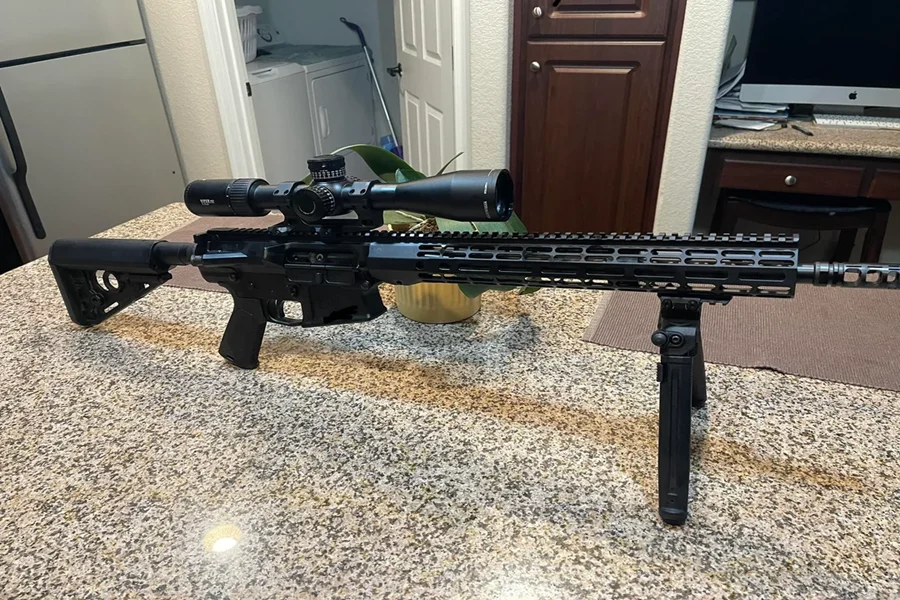
On the other hand, M-LOK was developed by Magpul Industries with a focus on simplicity and strength. It uses rectangular slots instead of keyhole-shaped ones and employs T-nuts that slide into position within these slots before being secured with screws. Unlike KeyMod’s open-source approach, M-LOK is proprietary but widely licensed to ensure consistency across manufacturers. This system prioritizes robust engagement between the attachment point and the rail for improved overall durability.
A significant distinction lies in how each platform achieves mounting stability. KeyMod relies on proper alignment between its locking lugs and slots, which can sometimes lead to concerns about loosening under repeated stress if not installed carefully. In contrast, M-LOK’s flat surface minimizes these risks because its locking mechanism applies even pressure across a larger area when tightened.
Another notable difference is compatibility with manufacturing processes. KeyMod rails require precise machining due to their complex shape, which can increase production costs or result in inconsistencies if not executed properly. In comparison, M-LOK’s simple rectangular cutouts make it easier and more cost-effective for manufacturers using various materials like aluminum or polymer.
Beyond technical differences, aesthetics also set them apart subtly. KeyMod’s distinctive keyhole pattern gives it a modern yet intricate look that appeals to some users seeking sophisticated rail designs. In contrast, M-LOK’s clean lines provide a sleeker appearance preferred by those valuing minimalism.
In essence, both platforms reflect unique approaches to solving similar challenges in firearm accessory attachment systems: balancing weight reduction with strength while ensuring flexibility for customization needs. Their differences highlight diverse priorities in design—KeyMod emphasizing simplicity of use during installation and M-LOK leaning toward superior performance under demanding conditions—which has made each platform resonate differently among users based on individual preferences or operational requirements.
Durability and Performance Testing Results
When choosing an attachment system for a modern firearm, durability and performance are critical factors that influence decision-making at both the individual level and within larger institutions like the military. KeyMod and M-LOK, as two of the most prominent rail systems, have been subjected to extensive testing to assess their strength, reliability, and usability under demanding conditions. The results of these tests offer valuable insights into how each system performs in real-world scenarios.
One major study conducted by the U.S. Special Operations Command (SOCOM) highlighted the differences between KeyMod and M-LOK during rigorous evaluations. These tests involved assessing impact resistance, pull-off strength (the force required to dislodge attachments), environmental resilience (such as exposure to dirt, mud, and debris), and overall reliability during sustained use. SOCOM’s findings played a large role in shaping military preferences and decisions regarding modular attachment systems.
In terms of impact resistance, M-LOK demonstrated superior performance compared to KeyMod. When subjected to physical shocks—such as drops or strikes—the M-LOK system retained its mounted accessories better than its competitor. This was attributed to its locking mechanism design, which uses larger engagement surfaces to secure attachments more effectively. KeyMod’s reliance on angled slots proved slightly less resistant under similar stress conditions.
Pull-off strength was another area where M-LOK outperformed KeyMod. Military evaluators found that the camming mechanism of M-LOK provided stronger retention forces than KeyMod’s screw-based method of securing accessories. This increased retention helps maintain zero for mounted optics or lasers even after harsh impacts—a vital consideration for shooters relying on accuracy in high-stakes situations.
Environmental tests also revealed some notable differences. Both systems were exposed to challenging conditions such as sandstorms, mud immersion, freezing temperatures, and corrosive environments like saltwater exposure. While both performed adequately for civilian use cases, testers noted that mud and debris tended to interfere more with KeyMod’s open-slot design than with the narrower channels used by M-LOK rails.
Despite these findings favoring M-LOK in multiple categories, it is worth acknowledging that KeyMod does provide acceptable performance for many shooting applications outside extreme environments or military standards. Its lighter design may appeal to users prioritizing weight savings over raw durability.
Ultimately, durability and performance testing revealed that while both platforms are viable options depending on specific needs or contexts, M-LOK emerged as the more robust choice capable of withstanding harsher treatment without failure or compromise in reliability—a key reason it has gained significant traction among military units worldwide. These results underscore why meticulous testing is essential when selecting equipment intended for rugged operational use cases where lives may depend on consistent functionality.
Durability and Performance Testing Results
When comparing KeyMod and M-LOK attachment systems, durability and performance testing play a pivotal role in determining which system is better suited for demanding environments. Both platforms were designed with modularity and adaptability in mind, but the way they respond under stress can vary significantly. The results of these tests have had a profound influence on their adoption in both civilian and military applications.
M-LOK consistently demonstrates superior durability in rigorous testing scenarios. One of the key reasons for this advantage lies in its design. The M-LOK system uses direct attachment points that are machined into the rail, offering a more secure connection compared to KeyMod’s slot-and-nut design. This difference means that M-LOK attachments are less likely to shift or loosen under heavy use or sustained recoil, which is critical for maintaining accuracy and reliability.
In performance testing conducted by third-party organizations as well as military evaluators, M-LOK also outperformed KeyMod in maintaining zero when accessories like optics or lasers were mounted. Situations involving repeated impacts, such as drops or collisions during field exercises, showed that M-LOK-mounted devices stayed more consistent compared to those mounted on KeyMod rails. This kind of reliability is especially crucial in high-stakes environments where failure is not an option.
Another area where durability testing provided insight was corrosion resistance—an important factor for equipment exposed to harsh weather or maritime conditions. While both systems performed adequately on this front when manufactured to military specifications, the simpler geometry of M-LOK slots allows for easier cleaning and maintenance, further enhancing its long-term resilience.
That being said, it’s worth noting that KeyMod still holds up decently under most civilian-use conditions. For shooters who operate primarily in controlled environments like indoor ranges or casual outdoor settings, the system may provide sufficient durability without significant drawbacks.
In head-to-head strength evaluations involving catastrophic stress (e.g., excessive torque applied to mounted accessories), M-LOK showed greater structural integrity before failure occurred. This robustness has made it particularly attractive for heavy-duty applications such as mounting grenade launchers or bipods intended for large-caliber weapons.
Ultimately, real-world performance under duress has cemented M-LOK’s reputation as the more rugged choice between the two platforms. For users prioritizing reliability in unpredictable conditions—whether law enforcement professionals, military personnel, or avid hunters—durability testing results strongly favor M-LOK over its competitor.
Advantages of M-LOK for Modern Shooters
The M-LOK attachment system has gained substantial traction among modern shooters, particularly in light of its adoption by militaries worldwide, including the U.S. Department of Defense. Its rise to prominence can be attributed to a range of benefits that cater to the demands of both professional users and recreational enthusiasts.
One key advantage is its engineering precision and modularity. The M-LOK system uses a “direct attachment” design with narrow slots that allow accessories to be mounted securely without the need for bulky rail covers or intermediary adapters. This ensures a sleek and lightweight design—qualities highly valued by modern shooters who demand maneuverability, especially in tactical or competitive environments.
Another standout feature is M-LOK’s enhanced durability under stress. Unlike other systems that rely on protruding components, M-LOK achieves attachment through a locking cam mechanism that secures accessories flush against the surface of the handguard. This streamlined approach minimizes snag hazards and reduces wear over time, making it more reliable for extended field use or high-intensity activities such as military operations.
M-LOK also excels when it comes to customization options. Its standardized slot dimensions ensure compatibility with an extensive array of third-party accessories, including grips, bipods, lights, lasers, and sling mounts. The open-source nature of the platform has encouraged innovation across the industry, giving shooters more freedom to tailor their rigs according to their specific needs without being restricted by proprietary components.
Not only does M-LOK perform well in controlled environments like testing labs but also in real-world scenarios where ruggedness matters most. Whether exposed to extreme heat during rapid fire or subjected to harsh elements like dust and water in outdoor settings, M-LOK consistently demonstrates resilience. This reliability instills confidence among users who know their setup will hold steady when it counts most.
For professional operators or hobbyists seeking weight savings without compromising strength or adaptability, M-LOK offers an appealing balance between form and function. Its widespread acceptance across both military forces and civilian markets further underscores its position as a leading choice for modern shooting platforms.
As technology continues to advance and user demands evolve, it’s clear why so many are gravitating toward M-LOK: precision engineering combined with practical performance makes it a forward-thinking solution for contemporary firearm enthusiasts.
Situations Where KeyMod Still Has a Place
While M-LOK has gained significant traction in recent years—especially after receiving the endorsement of the military—KeyMod still offers certain advantages in specific situations that continue to make it a viable choice for some firearm enthusiasts. Understanding these contexts can help shooters weigh the benefits of each system and make informed decisions based on their individual needs.
One of the primary reasons KeyMod remains relevant is its simplicity of design. The open-source nature of KeyMod has allowed manufacturers to create accessories and rails at cost-effective prices. For civilian users who are budget-conscious, KeyMod can be an attractive option, particularly when paired with lightweight rifles or setups where cost savings take precedence over extreme durability or modularity. In scenarios where firearms see limited exposure to harsh environmental conditions, such as indoor shooting ranges or recreational target practice, the difference in ruggedness between KeyMod and M-LOK may not be a decisive factor.
KeyMod also offers fast attachment capabilities for users who prioritize ease-of-use over other features. Its design allows accessories to slide into place smoothly without needing tools for initial alignment, which might appeal to shooters who modify their configurations frequently during casual use. While this difference may seem minor, it can save time for those who regularly switch between different setups depending on their activity.
Another consideration is accessibility for legacy systems. Some firearm owners have existing rifles equipped with KeyMod rails and a collection of compatible accessories. Upgrading to M-LOK would not only require replacing the rail system but also investing in all-new gear designed specifically for M-LOK compatibility—a costly endeavor that may not feel justified if current equipment still fits their needs.
Finally, certain niche markets still favor KeyMod due to personal preference or aesthetics. Some users argue that the more open design of KeyMod offers a cleaner look compared to the angular slots of M-LOK systems. While this aspect does not impact performance directly, visual appeal remains an important factor for many gun owners when customizing their rifles.
Though military testing heavily favored M-LOK due to its superior durability and strength under stress, it’s important to recognize that not all shooters subject their gear to those same extreme conditions. For environments where exposure to dirt, debris, and heavy recoil is minimal—and where costs need to stay low—KeyMod continues to provide an efficient solution without compromising functionality for everyday civilian applications.
In sum, while M-LOK might dominate discussions today as the new standard in mounting systems, there are still valid reasons why certain segments of shooters stick with—or even choose—KeyMod over transitioning entirely. By understanding these specific use cases and priorities, individuals can make more thoughtful decisions about which attachment system best aligns with their circumstances.
Which Attachment System Is Right for You?
Selecting the appropriate attachment system for your firearm often depends on your specific needs, preferences, and how you intend to use the weapon. While both KeyMod and M-LOK offer solutions for mounting accessories such as grips, lights, and lasers to your handguard, they excel in different areas. Understanding the benefits and potential limitations of each platform is crucial before making a decision.
KeyMod might appeal to users who value ease of installation. Its open-style keyhole-shaped slots were designed with simplicity in mind, allowing accessories to be attached quickly with minimal tools. For casual shooters or hobbyists who may not require heavy-duty performance or rigorous durability testing beyond standard conditions, KeyMod can still offer a reliable option.
On the other hand, M-LOK has gained significant traction among military branches and professional shooters due to its superior strength under stress and greater adaptability. The direct-contact locking mechanism used by M-LOK allows accessories to sit flush with the handguard while providing a secure hold even during rough handling or high-impact situations. This makes it an ideal choice for tactical operators or anyone seeking peak performance in demanding environments.
Another factor that could influence your choice is aftermarket support. The firearm accessory market has leaned heavily toward M-LOK in recent years. As a result, manufacturers are producing more options compatible with this system compared to KeyMod. If you prioritize flexibility in accessorizing your rifle now and into the future, M-LOK offers broader availability across brands.
Cost considerations may also play a role since both systems tend to be comparable in price for entry-level gear; however, premium-grade components might vary slightly depending on the manufacturer. Weighing these factors alongside how often you plan on modifying your setup or using it under extreme conditions can help clarify which platform suits you best.
Ultimately, choosing between KeyMod and M-LOK requires examining how the characteristics of each align with your personal shooting requirements. Take into account whether ruggedness under duress is paramount or if ease of use better suits your goals. By assessing what matters most in terms of functionality and support within your budget, you’ll make an informed decision tailored specifically to your needs as a shooter—whether professional or recreational.